
Overcoming the PCB Laminate Shortage: A DFM Guide
The most effective way to manage a PCB laminate shortage is to treat it as an engineering decision rather than a purchasing problem. Material availability now affects far more than PCB fabrication. It can influence stackup selection, assembly processes, testing, validation, and production schedules, especially for high-reliability products.
As lead times fluctuate and specialty laminates become harder to source, engineering, procurement, and manufacturing teams must evaluate material changes as part of the entire production process instead of solving them at the purchasing stage alone. A structured DFM review helps identify technical and operational impacts before production begins, reducing the chance that a material substitution creates new delays later in the build. The sections below explain where laminate shortages introduce risk and how engineering-led planning helps keep production on track.
Why PCB Laminate Availability Has Become a Production Risk
The PCB laminate shortage has become a production risk because raw material availability now affects decisions throughout the manufacturing process. Longer lead times, allocation programs, and fluctuating costs can delay PCB fabrication, influence approved stackups, and complicate production planning. Understanding where these pressures originate helps engineering and procurement teams respond with informed decisions instead of reactive material substitutions.
What is Copper Clad Laminate?
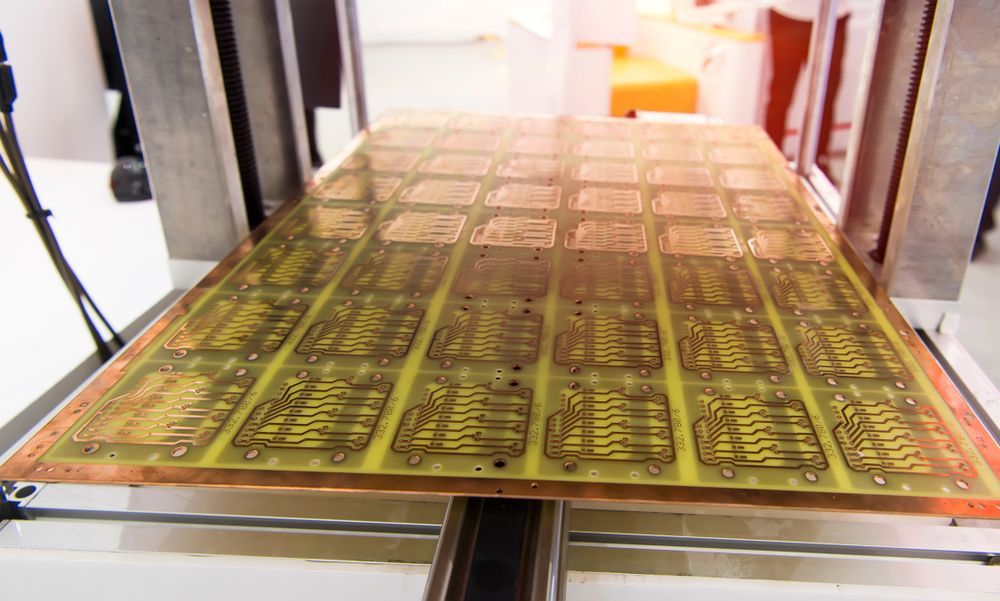
Copper-clad laminate (CCL) forms the foundation of nearly every printed circuit board. It consists of one or more layers of copper foil bonded to an insulating substrate, most commonly woven fiberglass reinforced with an epoxy resin system. Together, these materials create the cores and prepregs used to build multilayer PCB stackups. The copper foil forms the conductive circuitry, the fiberglass provides mechanical strength and dimensional stability, and the resin system bonds the structure together while providing electrical insulation. Because every PCB begins with these materials, laminate availability is one of the earliest factors affecting production schedules.
While many engineers associate laminates with electrical performance, they also influence manufacturability, thermal stability, mechanical strength, and long-term reliability. Laminate properties also affect controlled impedance, signal integrity, and dielectric performance, making material selection especially important for high-speed, RF, and other performance-sensitive applications. As a result,
PCB material selection extends beyond choosing a well-known product family. Material properties must align with the board's electrical requirements, fabrication processes, assembly methods, and end-use environment. When one of these materials becomes constrained, the impact can extend well beyond bare-board fabrication, influencing stackup decisions, fabrication lead times, and the engineering reviews needed before production moves forward.
Advanced Material Demand Is Extending Lead Times
Demand for advanced laminate materials has increased as industries such as artificial intelligence, aerospace, defense, telecommunications, and high-performance computing continue to expand. Many of these applications depend on low-loss laminates and specialty resin systems that maintain signal integrity at higher frequencies and support increasingly complex PCB designs. As manufacturers prioritize production capacity for these materials, availability for other laminate families can become more limited.
The effects extend beyond specialty products. When capacity shifts toward advanced materials, standard constructions may also experience longer lead times as suppliers balance production schedules across multiple product lines. At the same time, raw material availability for copper foil, fiberglass, and resin systems can create additional constraints that ripple throughout the PCB manufacturing process.
For engineering and procurement teams, longer lead times create planning challenges well before fabrication begins. A laminate that was readily available during the design phase may have different availability by the time production is released. Reviewing material options early and maintaining communication across design, sourcing, fabrication, and assembly teams helps reduce schedule disruptions when market conditions change.
How Prices and Lead Times Could Shift During 2026
Material pricing and lead times are expected to remain variable throughout 2026 as manufacturers continue balancing production capacity against global demand. While standard laminate availability may stabilize in some areas, specialty materials used for high-speed, RF, and other high-performance applications could continue experiencing longer procurement cycles. Individual lead times will likely differ by material family, manufacturer, geographic region, and approved fabrication source.
Pricing may also fluctuate as copper costs, resin availability, transportation expenses, and global manufacturing activity change over time. In some cases, extended shortages may also signal that a laminate family is approaching long-term obsolescence rather than experiencing a temporary supply interruption. Recognizing these trends early gives engineering teams more time to evaluate alternate materials before redesigns or product requalification become necessary.
Rather than attempting to predict market conditions, organizations can reduce scheduling uncertainty by confirming material availability early, sharing production forecasts with manufacturing partners, and evaluating alternate materials before they become urgent. A proactive planning process gives engineering, procurement, and manufacturing teams more flexibility when lead times or pricing change after a design has been released for production.
How Material Constraints Affect PCB Assembly and Test
A laminate shortage does not end with the fabrication of a bare printed circuit board. Material changes can influence how a board behaves during assembly, how it responds to thermal cycles, and how consistently it performs throughout production. Even when an alternate laminate meets many of the same published specifications, differences in material properties can affect manufacturing processes that occur later in the build.
For example, variations in dielectric thickness, resin content, or thermal expansion may influence controlled impedance, board flatness, moisture sensitivity, or soldering performance. These changes can also affect test fixtures, inspection criteria, and the baseline measurements established during product qualification. As a result, material substitutions should be evaluated across the entire manufacturing process rather than at a single production stage.
Engineering teams commonly review the effects on:
- Surface-mount and through-hole assembly processes
- Automated Optical Inspection (AOI) and X-ray inspection results
- In-circuit testing (ICT), flying probe testing, and functional testing
- Mechanical fit within the final enclosure or box build
Using a standardized
PCB inspection checklist throughout production helps identify unexpected variation before finished assemblies move to the next operation. Inspection and testing do more than verify workmanship. They also confirm that changes made earlier in the manufacturing process have not introduced unintended electrical, mechanical, or reliability concerns. Viewing material availability through the complete production chain allows engineering, quality, and manufacturing teams to identify potential issues earlier, reducing downstream rework and schedule disruption.
Why Laminate Substitution Requires DFM Review
Replacing one laminate with another is rarely as simple as matching a few published material properties. Even laminates with similar dielectric constants or thermal ratings can perform differently during fabrication, assembly, and long-term operation. Before approving a substitute, engineering teams should evaluate how the change affects the entire PCB design, from the stackup and controlled impedance requirements to the finished assembly.
This is where
design for manufacturability (DFM) becomes part of the decision-making process. Rather than focusing only on material availability, a DFM review examines how a proposed laminate interacts with fabrication capabilities, assembly processes, testing methods, and overall product performance. Engineers compare electrical, thermal, and mechanical characteristics while confirming the revised stackup maintains the required board thickness, impedance, and manufacturing tolerances. They also evaluate fabrication processes such as drilling, lamination, and plating, along with assembly considerations including thermal exposure, soldering performance, and dimensional stability. For many high-reliability products, the review also confirms that substitute materials comply with approved vendor lists (AVLs), approved manufacturer lists (AMLs), or customer-controlled BOM requirements before engineering changes are released. Depending on the application, additional verification, qualification, or customer approval may also be needed before production can move forward.
Taking the time to review these factors helps reduce unexpected production delays and minimizes the likelihood that a material substitution introduces downstream quality concerns. A structured engineering review also gives procurement, manufacturing, and quality teams a shared understanding of the proposed change before it reaches the production floor.
How Engineering Teams Can Reduce Laminate Risk
Engineering decisions made early in the design cycle can significantly reduce the impact of material constraints later in production. Waiting until a PCB enters fabrication to evaluate laminate availability limits the number of practical options and may introduce unnecessary design revisions. Instead, engineering teams should address material considerations alongside stackup development and manufacturing planning.
To reduce laminate-related production risk, engineering teams should:
- Define the electrical, thermal, and mechanical performance requirements before selecting a specific laminate.
- Review stackups early to identify approved material alternatives when product performance permits.
- Collaborate with PCB fabricators and manufacturing partners during the design phase to identify potential sourcing concerns.
- Limit late-stage design revisions that alter layer counts, board thickness, or controlled impedance requirements.
- Document approved materials and engineering changes to maintain configuration control throughout the product lifecycle.
These practices help engineering, procurement, and manufacturing teams work from the same set of technical requirements before production begins. Early planning also creates more time to evaluate alternate materials, coordinate with fabrication partners, and complete any necessary validation activities without disrupting the production schedule.
How Procurement Teams Can Protect the Production Schedule
Procurement teams play an important role in reducing the effects of material constraints long before production begins. While sourcing the right laminate remains a priority, maintaining schedule stability also depends on communication, forecasting, and coordination with engineering and manufacturing partners. Early visibility into upcoming production needs creates more opportunities to address availability challenges before they affect fabrication.
Procurement teams can strengthen production planning by:
- Sharing rolling forecasts with fabrication and manufacturing partners whenever possible.
- Identifying assemblies that rely on specialty laminates or unique stackup constructions.
- Reviewing material availability before final production release instead of after purchase orders are issued.
- Evaluating blanket orders or strategic inventory for long-term production programs when demand is well established.
- Coordinating closely with engineering when alternate materials are being considered to confirm that approved specifications remain unchanged.
These practices help reduce last-minute sourcing decisions that can introduce additional engineering reviews or production delays. When procurement, engineering, quality, and manufacturing teams communicate throughout the product lifecycle, they are better positioned to respond to changing material availability while maintaining production schedules and protecting the consistency expected for high-reliability electronic assemblies. Regular communication with PCB fabricators and EMS partners also creates earlier visibility into material availability, helping teams identify approved alternatives before production schedules are affected.
Validate Material Changes Before Production
Before introducing a substitute laminate into production, engineering and quality teams should complete a structured validation process. Verifying compatibility before fabrication reduces the risk of discovering performance or manufacturability issues after assemblies have already been built. The level of validation will vary by product complexity, customer specifications, and applicable IPC Class 1, 2, and 3 requirements, but a consistent review process helps reduce unnecessary production delays. Depending on the product and industry, a material substitution may also require additional impedance verification, environmental or thermal testing, first article inspection, or customer approval before full production resumes.
A typical validation process includes:
- Confirm that the substitute material meets the electrical, thermal, mechanical, and environmental requirements established for the original design.
- Review the updated stackup to verify controlled impedance, board thickness, layer construction, and fabrication compatibility.
- Build prototype or first-article assemblies when additional manufacturing or reliability data is needed.
- Perform the required inspection and electrical testing to confirm the revised material performs as expected throughout fabrication and assembly.
- Document the approved material change and communicate the revision across engineering, procurement, manufacturing, and quality teams before releasing production.
Following a defined validation process creates confidence that approved material substitutions maintain product performance while reducing the likelihood of unexpected manufacturing issues later in the production cycle.

How EI Microcircuits Supports Laminate Risk Management
Material availability will continue to influence PCB manufacturing decisions, but it does not have to determine project outcomes. At EI Microcircuits, we work closely with OEMs throughout the product lifecycle to evaluate material availability, review design implications, and identify manufacturing strategies that help keep production on schedule. By collaborating early with customers, PCB fabricators, and suppliers, we help identify approved material alternatives, review stackup options, and evaluate manufacturability before designs are released to production. By involving engineering, procurement, manufacturing, and quality teams early in the process, we can address potential sourcing concerns before they become production delays.
Our integrated
electronics manufacturing services (EMS) solutions combine design for manufacturability reviews, PCB assembly, inspection, testing, box-build integration, and lifecycle manufacturing support under one roof. This collaborative approach helps identify approved material alternatives, validate engineering changes, and maintain traceability throughout production while meeting the quality expectations of high-reliability industries.
Every project presents unique technical and sourcing considerations. Working with an experienced manufacturing partner creates more opportunities to evaluate options before fabrication begins and reduces the likelihood of last-minute schedule disruptions. If you are planning a new program or evaluating material alternatives for an existing design,
contact EI Microcircuits to discuss your manufacturing goals and learn how we can help keep your production moving forward.



let's talk
EI Microcircuits is comprised of three production facilities totaling over 100,000 square feet of climate-controlled manufacturing, engineering and warehousing. We are ready to be the solution to your next project. Contact Us, Request a Quote or Schedule a Tour today!
Manufacturing plant 1
1651 Pohl Road
Mankato, MN 56001
P: 507.345.5786
Manufacturing plant 2
2011 Klein Street
St. Peter, MN 56082
P: 507.934.5722
manufacturing plant 3
69 Power Drive
Mankato, MN 56001
P: 507.386.9160
*Each facility is configured to support your production needs. While maintaining continuity with each other in equipment, training and process control, each facility offers its own specialty. All facilities share the same data center to allow for seamless manufacturing between locations.