
FPGA vs Microcontroller: Key Differences Explained
Engineers selecting processing architectures often reach a familiar crossroads. A microcontroller offers integration and simplicity. An FPGA introduces configurability and parallelism. Both can anchor a successful design, yet each carries distinct implications for PCB layout, validation, and long-term production.
Tension builds when performance targets, regulatory constraints, and manufacturing realities converge. A disciplined evaluation of FPGA vs microcontroller choices clarifies architecture, risk, and lifecycle scalability.
What Is a Microcontroller (MCU)?
A microcontroller integrates a processor core, memory, and peripheral interfaces on a single chip. Designed for embedded control applications, MCUs handle tasks such as sensor input, motor control, communications, and user interfaces within a defined firmware structure. Their architecture supports sequential processing with predictable timing behavior.
For many OEM programs, microcontrollers present a streamlined path to implementation. Integrated analog-to-digital converters, communication buses, and timers reduce external component count, simplify PCB layout, and stabilize long-term production planning when application requirements are well defined and performance margins are clearly established across the expected operating range.

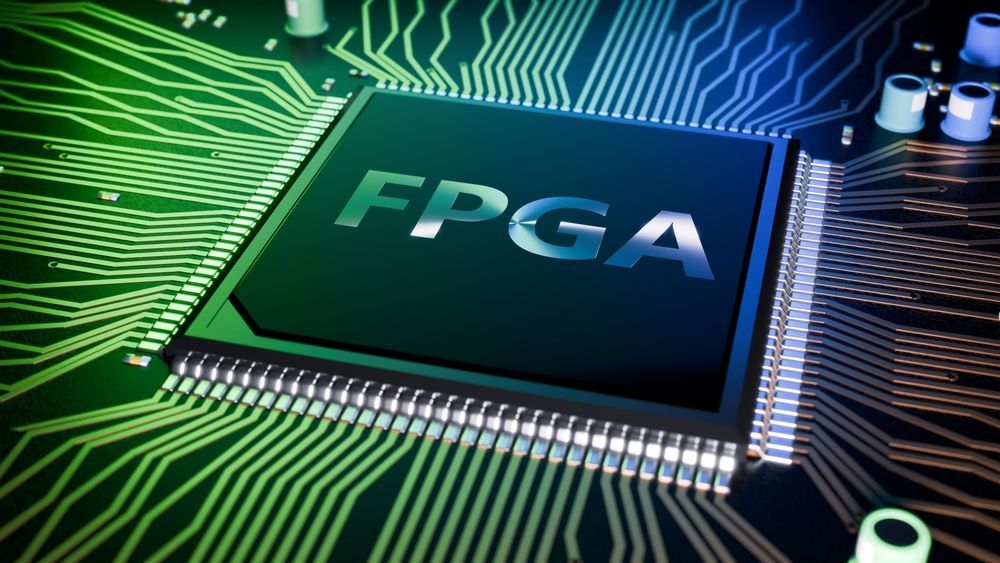
What Is an FPGA?
What Is an FPGA? An FPGA is a semiconductor device built around a matrix of configurable logic blocks connected through programmable interconnects. Unlike fixed-function processors, field-programmable gate arrays (FPGAs) can be reconfigured after manufacturing to implement custom hardware logic. Engineers define functionality using hardware description languages, creating parallel processing structures tailored to application needs.
This architecture handles high-speed data, real-time signal processing, and deterministic control paths. For programs facing evolving performance targets, FPGAs introduce flexibility at the silicon level while adding design, timing closure, and validation complexity across development cycles and production qualification.
FPGA vs Microcontroller: Architectural Differences
A comparison table helps with engineering evaluation and internal design reviews.
| Attribute | Microcontroller (MCU) | FPGA |
|---|---|---|
| Processing Model | Sequential instruction execution | Parallel hardware-defined logic |
| Flexibility | Fixed architecture | Reconfigurable after deployment |
| Development Approach | Firmware-based programming | Hardware description language design |
| Power Consumption | Typically lower | Often higher, depending on utilization |
| Complexity | Integrated and compact | External memory and support circuitry are common |
In FPGA vs microcontroller discussions, architectural structure drives timing behavior, board layout density, validation scope, and long-term scalability. It also shapes thermal management planning, power distribution network design, signal integrity strategy, and overall component sourcing risk across extended production lifecycles.
PCB Design Implications: What Engineers Must Consider
Processor selection strongly influences PCB layout strategy. Microcontrollers typically consolidate functionality, which can reduce layer count and routing density. FPGA-based designs often introduce high pin counts, controlled impedance traces, and complex power distribution networks. These characteristics affect stack-up configuration, signal integrity modeling, and thermal planning.
A sound decision also depends on understanding
how PCBs are built, including fabrication tolerances, via structures, and lamination sequencing, since these parameters affect yield, inspection access, and long-term production stability. The impact extends across prototype validation, pilot builds, and sustained high-reliability manufacturing programs in regulated medical and aerospace applications with stringent documentation and traceability requirements.
Manufacturing Considerations for FPGA and MCU-Based Boards
Manufacturing complexity tends to increase as architectural demands grow. Key factors include:
- Component Density: FPGA boards often use fine-pitch BGAs and higher layer counts.
- Thermal Management: Power dissipation profiles differ significantly between architectures.
- Inspection Strategy: X-ray inspection becomes more prominent with advanced packaging.
- IPC Class Certifications: Workmanship standards must match end-use reliability expectations.
- Test Coverage: In-circuit and functional testing strategies vary by design architecture.
- Supply Chain Stability: Long-term silicon availability and lifecycle forecasting shape sustained production.
Manufacturing planning should align assembly capability, inspection depth, and documented process controls with program risk tolerance.
When to Choose a Microcontroller
A microcontroller is often the right choice when system requirements are well defined and computational demands are moderate. Applications centered on sensor management, motor control, user interfaces, and standard communication protocols benefit from integrated peripherals and predictable firmware execution. Power consumption targets and compact board footprints further strengthen the case for this option.
Programs with stable feature sets, clear timing requirements, and cost-sensitive production forecasts frequently pair well with MCU-based architectures across medical devices, industrial automation platforms, and embedded control systems. In these environments, validation scope and regulatory documentation tend to remain more straightforward, and manufacturing complexity is generally easier to manage.
When to Choose an FPGA
An FPGA becomes attractive when performance requirements exceed what sequential processing can handle efficiently. High-speed data acquisition, real-time signal processing, advanced encryption, and custom communication protocols often benefit from parallel hardware logic. Designs that anticipate evolving algorithms or field updates also line up well with reconfigurable architectures.
Programs in aerospace, defense, and high-end medical imaging frequently select FPGA platforms when deterministic timing, hardware-level control, and scalability outweigh the added development and validation effort. This is especially true for systems with high channel counts, bandwidth-intensive data streams, and tight latency targets under mission-specific environmental and reliability constraints.
Hybrid Architectures: Combining FPGA and Microcontroller on a Single PCB
Hybrid architectures combine the strengths of both processing platforms on a single board. A microcontroller may handle supervisory control, communications, and low-power functions, while the FPGA manages parallel processing, high-speed interfaces, or custom logic acceleration. This partitioning supports efficient resource use and balanced power consumption.
Design teams should examine inter-device communication paths, clock domain management, and signal integrity constraints. They also need coordinated firmware–hardware validation plans, comprehensive production test strategies, clear power sequencing requirements, and robust configuration management documentation. Attention to these areas helps align architectural intent with manufacturable, repeatable, and field-serviceable hardware across regulated and high-reliability programs with defined lifecycle ownership.
Lifecycle and Regulatory Considerations
Processor selection carries long-term implications well beyond initial performance targets. Component longevity, silicon revision cycles, and firmware or bitstream maintenance strategies all influence sustained production planning. In regulated industries, design documentation, validation records, and traceability frameworks must reflect architectural decisions from early prototypes through volume manufacturing.
Engineering and quality teams should coordinate supplier roadmaps, change control procedures, cybersecurity updates, requalification testing protocols, and obsolescence forecasting. Documented risk assessments, internal audit readiness planning, and customer notification workflows contribute to continuity across the full operational life of the product in high-reliability environments with strict compliance oversight.
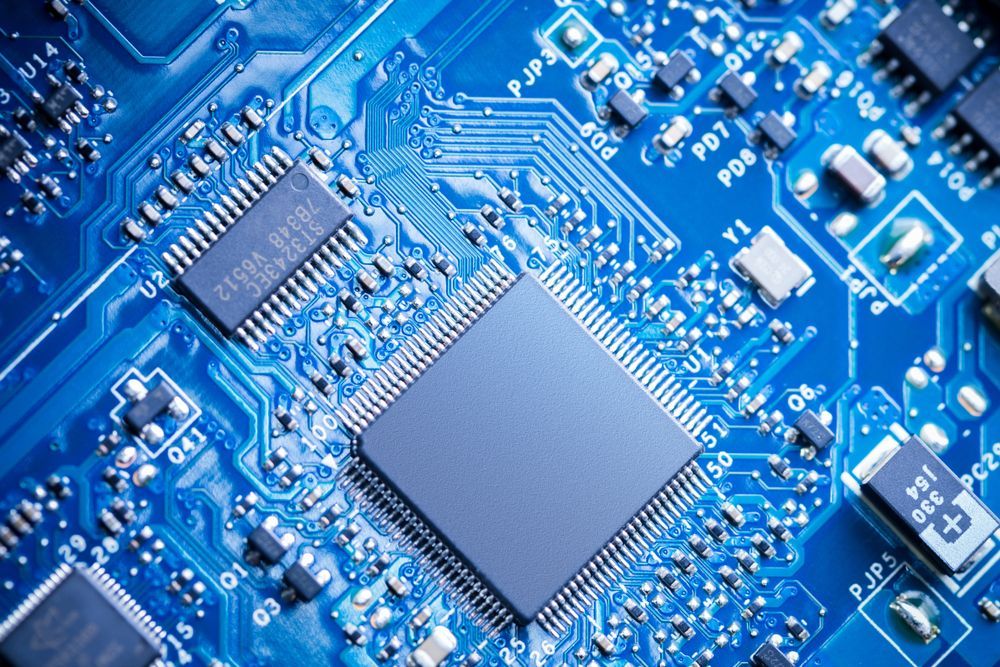
How EI Microcircuits Supports Complex FPGA and MCU-Based Builds
At EI Microcircuits, architectural decisions tie closely to disciplined manufacturing alignment. Through our manufacturing services, we conduct DFM analysis, use controlled assembly processes, and apply advanced inspection methods such as AOI and X-ray. These activities operate within documented quality management systems that meet ISO 13485 and AS9100D requirements. Complex FPGA and MCU-based boards call for rigorous validation, traceability, and lifecycle planning across prototype, pilot, and sustained production phases.
If your program uses advanced processing architectures,
contact EI Microcircuits to review your design and plan a stable, high-reliability production path.


let's talk
EI Microcircuits is comprised of three production facilities totaling over 100,000 square feet of climate-controlled manufacturing, engineering and warehousing. We are ready to be the solution to your next project. Contact Us, Request a Quote or Schedule a Tour today!
Manufacturing plant 1
1651 Pohl Road
Mankato, MN 56001
P: 507.345.5786
Manufacturing plant 2
2011 Klein Street
St. Peter, MN 56082
P: 507.934.5722
manufacturing plant 3
69 Power Drive
Mankato, MN 56001
P: 507.386.9160
*Each facility is configured to support your production needs. While maintaining continuity with each other in equipment, training and process control, each facility offers its own specialty. All facilities share the same data center to allow for seamless manufacturing between locations.